Is Messy Data Sabotaging Your Events? The Silent Killer Costing You Time and Money
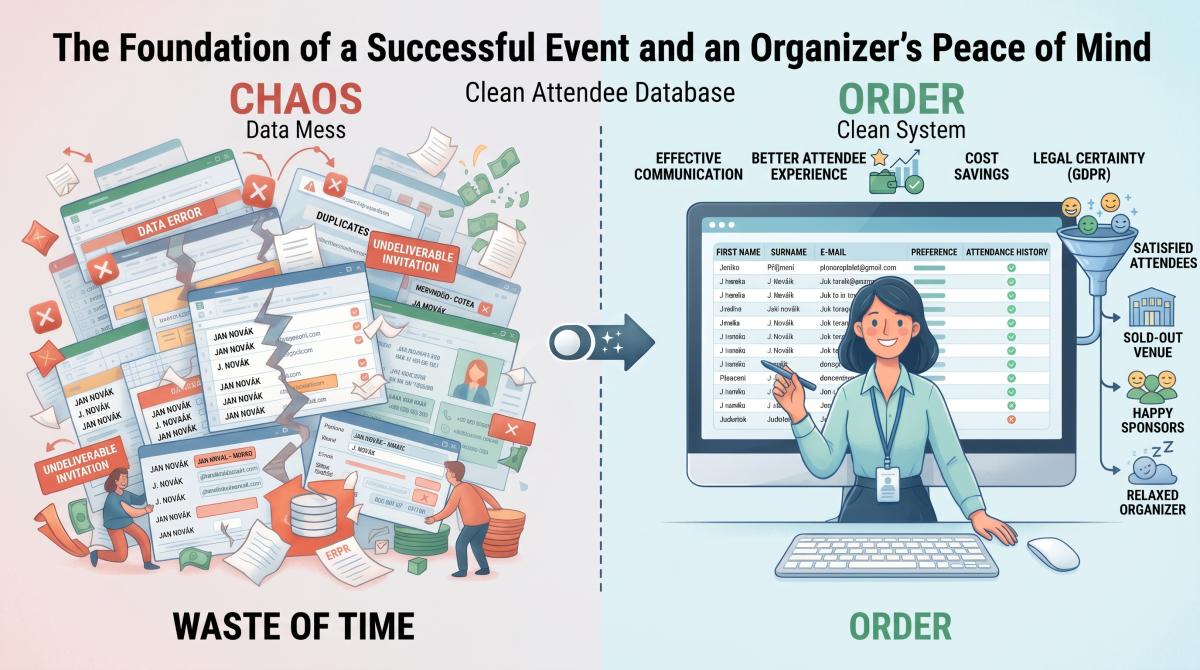
Imagine organizing a major conference, a live concert, or a specialized workshop. You've spent months scouting venues, fine-tuning the agenda, booking speakers, and pouring energy into marketing. D-day arrives, people are pouring through the doors, and everything feels like it's running like clockwork. But then you look at the numbers. Your email invitation bounced for a third of your contacts, your registration list is riddled with hundreds of duplicate names, and your print materials are missing crucial info for half the people who actually showed up. Suddenly, a triumphant celebration turns into firefighting mode.
Why does this happen? The answer is surprisingly simple: data chaos.
Whether you're organizing events for the very first time or you have dozens of successful gatherings under your belt, managing your attendee information is the silent engine driving your success. In this article, we'll explore why you need to care about this topic, the hidden threats of neglected attendee database management, and how to turn chaos into a streamlined system that saves you money, time, and endless headaches.
Introduction: The Database as the Silent Heart of Every Event
When people talk about event marketing, most envision colorful social media banners, catchy teaser videos, or persuasive invite copy. Those are vital storefront windows, of course. But no matter how brilliantly you sell your event to the outside world, the real magic happens behind the scenes.
Your attendee database is your central nervous system. It tracks who showed interest last time, who actually showed up, what their preferences are, and what they expect from you. When this system runs smoothly, information flows where it needs to, and you always know who you're talking to. But the moment your database fills up with typos, outdated emails, and scattered notes across random spreadsheets, the system starts to break down.
Think of your database as a house. If your foundations are solid and things are tidy, living there is easy. But if you pile everything in a giant heap in the middle of the living room, sooner or later, you're going to trip. In the events world, tripping means wasted cash, frustrated attendees, and in worst-case scenarios, legal trouble.
The Legal Angle: Why Proper Data Management is Non-Negotiable (GDPR in Practice)
This might sound like dry legal jargon, but trust us—once fines come into play, the smiles vanish. Data protection and GDPR compliance for event organizers are the boundaries we all have to play within. And sloppy data is where the nastiest legal traps are hiding.
What happens when an attendee emails you asking to be completely erased from your system (the right to be forgotten), but you have their info scattered across three different spreadsheets, your phone, and an email marketing tool? Chances are, you'll miss their request. And a hefty fine from the data protection authority won't be far behind.
Keeping a clean database isn't just about ticking compliance boxes; it's a sign of respect for your attendees. People trust you with their emails, phone numbers, and sometimes sensitive details. They expect you to handle them securely. Centralized data makes it easy to prove where you got your contacts, what they consented to, and lets you let them download or delete their data anytime. A clean system is your best shield against ugly legal complications.
Financial Impact: The Hidden Cost of Dead Contacts and Duplicates
Every organizer wants to spend their budget efficiently. Yet, business owners and community leaders frequently burn cash where they shouldn't—all thanks to "ghosts" lurking in their mailing lists.
Imagine blasting an email campaign to ten thousand contacts. Sounds like massive reach, right? But if half those addresses are dead, you're shouting into the void. You're paying your email service provider based on contact volume or emails sent, essentially sponsoring inboxes that no one reads anymore. Worse, outdated emails ruin your sender reputation with internet service providers (like Gmail or Outlook). If your bounce rate spikes, your legitimate messages start landing in the spam folders of people who actually want to read them.
Another silent budget-drainer is duplication. In messy lists, it's common for a single person to show up three times—once under their full name, a second time with a typo in their email, and a third time as a corporate contact. The result? They get your invite three times. Why is that bad? It looks unprofessional, annoys your audience, and tanks the likelihood of them actually showing up. Data hygiene doesn't cost a fortune; it just requires a system and basic routine maintenance.
Effective Communication: How Good Data Boosts Attendance
Modern marketing isn't about mass carpet-bombing. People are flooded with information, and they're growing increasingly numb to generic invitations. They want to feel like an offer was custom-tailored just for them.
This is where clean, structured data gives you an unfair advantage. When your contacts are tagged with past events they've attended, topics they care about, or their specific industry, you can finally hyper-target your communication.
- Real-World Example: Why email an invite for a deep-dive technical AI seminar to someone whose entire career is in HR? You save them the disappointment of irrelevant content, and you save yourself an unsubscription.
When your data is clean, you can pull off personalization that actually works. Emails addressing people by the right name with content matching their exact interests boast exponentially higher open and click rates. Attendee database management isn't just an administrative chore; it's a core marketing powerhouse.
The Attendee Experience: Personal Touch and Smooth Check-In as Your Business Card
Ask yourself: How do you feel walking into a conference where organizers have zero clue who you are, desperately search for your name in a blurry Excel sheet, and hand you a badge with a glaring typo in your last name? You're probably questioning the overall professionalism of the event.
On the flip side, picture a check-in desk where you walk up, a smiling host greets you by name, prints your pre-made badge in a second, and waves you off to get your coffee. That seamless flow isn't a happy accident—it's the fruit of solid data preparation.
When your system is in order, you know ahead of time how many people are coming, their dietary restrictions (an absolute must-have standard today), or which workshop tracks they picked. You can size your rooms accordingly, order the right amount of catering, and eliminate lobby bottlenecks. Attendees walk away not just with new knowledge, but with the feeling that they were truly cared for. And that's the absolute best invite for your next event.
Building Value: Leveraging Historical Data for Future Editions
One event ends, the next one begins. It's the relentless cycle of every active event organizer. But most people commit a fatal flaw: once the event wraps up, they close the files, dump them into an "Archive 2024" folder, and start with a blank slate next year. That means leaving a goldmine behind.
Historical data is pure gold. If you maintain a systematic database, post-event evaluation becomes effortless:
- Which partners or speakers drew the loudest applause?
- Which ticket tiers sold out fastest?
- Which attendees are returning for their third consecutive year?
- ...and much more.
This hyper-loyal core audience is precisely who you should target early. Offering them early-bird perks before launching your massive public campaign is a bulletproof way to secure a stable baseline of attendees and manufacture a sense of exclusivity. Without clean historical data, you'll never spot customer loyalty—let alone reward it.
Conclusion: First Steps to Data Cleanup and Long-Term Order
You might be staring at your current setup right now, looking at scattered spreadsheets, and thinking that whipping this into shape is a superhuman task. The good news is, you don't have to fix everything overnight. The secret is starting with small steps and establishing rules for the future.
- Audit your current state: Map out everywhere your contacts currently live. Consolidate them into a single central hub—ideally a specialized CRM or a battle-tested event platform.
- Purge duplicates and dead weight: Cleanse your lists of people who repeatedly opted out or whose emails bounce. Don't be afraid of a smaller, highly active list.
- Establish data collection rules: For new sign-ups, only track what you'll actually use. The fewer mandatory fields on your registration form, the higher your completion rates.
- Maintain ongoing hygiene: Cleaning your database once isn't enough. Dedicate a moment to tidying up after every single event.
A clean attendee database isn't a sexy topic that makes magazine cover stories. Yet, it's the invisible hero deciding whether your next event is a massive flop or an unforgettable experience. Clean up your data, and you'll find event planning instantly becomes a whole lot more joyful.
Do you organize events?
- Courses
- Seminars
- Trainings
- Workshops
- Conferences
- Camps
- Tours
Try S-CRM – a system designed by organizers for organizers. It is based on real practical needs and has been proven by thousands of events over years of live operation.
We will gladly demonstrate the system to you, answer your questions, and help set up a tailor-made solution.